Options
-
Construction
- carbon steel (s235Jr)
-
Methods of installation
- embedded in concrete


The Notice Board 08.039.1, a distinguished member of the Royal product line, exemplifies the sophisticated fusion of historical aesthetics and contemporary functionality. Designed by Tomasz Szpytma, this element of street furniture serves as a reliable and visually striking solution for public information display. Its construction is defined by a robust combination of carbon steel (S235JR) and high-quality cast iron, ensuring structural integrity and longevity within diverse urban environments. The classical design language allows it to integrate seamlessly into historic town centers, parks, and refined public squares, elevating the overall architectural character of the surroundings while maintaining its primary utility.
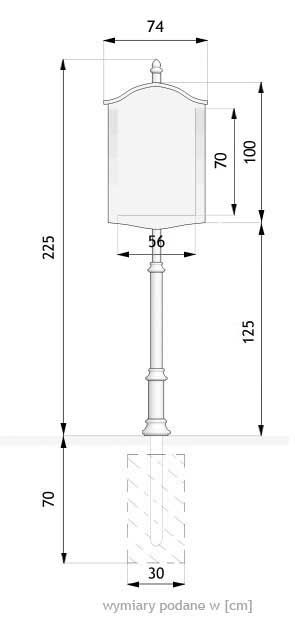
Engineered with precision, the unit features a dedicated display surface measuring 56x70 cm, protected by a transparent glazing system that shields information from environmental factors. The board stands at a total height of 233 cm above ground level, with a depth of 16 cm and a width of 74 cm, providing optimal visibility for pedestrians. To ensure maximum stability and durability, the structure is designed for permanent installation, requiring the anchoring section to be embedded directly into concrete. This mounting method reinforces the resilience of the information board against heavy foot traffic and various weather conditions, making it a dependable choice for long-term outdoor infrastructure projects.
As a key component of modern urban furniture, the Royal series notice board provides a clear and professional platform for local announcements, community notices, and wayfinding signage. The material composition of carbon steel and cast iron is chosen for its strength and refined appearance, reflecting a commitment to high-quality craftsmanship characteristic of ZANO products. By combining timeless design with structural reliability, this notice board satisfies the aesthetic and functional requirements of municipal developers and landscape architects who seek to harmonize utility with classic visual appeal. Its installation creates a cohesive look when paired with other street furniture elements from the same line, such as matching benches or trash bins, ensuring a unified design scheme across public spaces.