Options
-
Construction
- carbon steel (s235Jr)
- stainless steel (Aisi 304)
-
Methods of installation
- free-standing
- attached by bolts to foundation


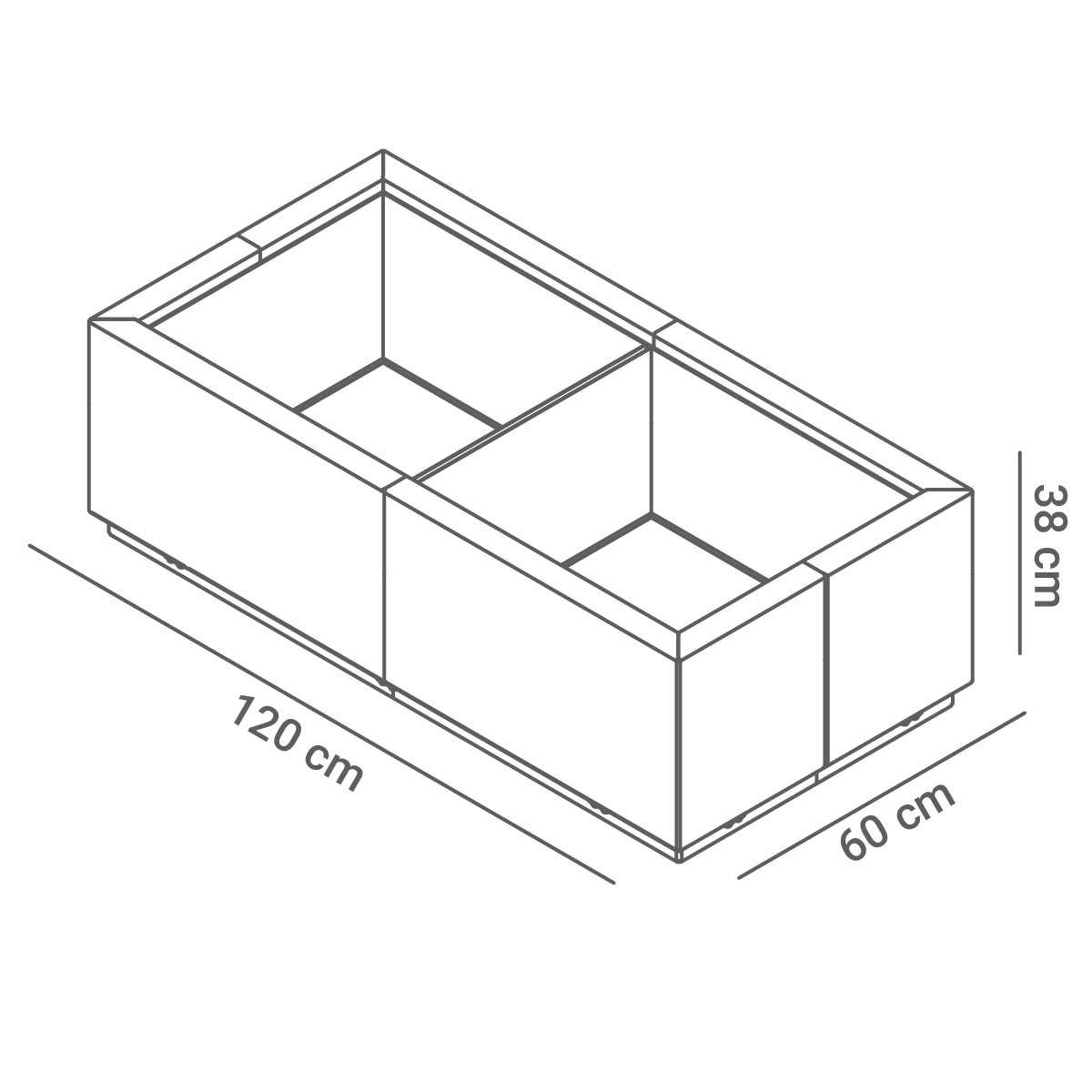
The Quadro planter (06.076.M) is a versatile element of urban furniture designed by Iwona Żaczek, representing a modern approach to greenery integration in public spaces. As a key component of the modular Quadro product line, this planter is engineered to meet the highest standards of durability and aesthetic precision required for contemporary city landscapes. With dimensions of 120 cm in width, 60 cm in depth, and a height of 38 cm, it provides an optimal volume for planting, ensuring that vegetation remains healthy while contributing to the visual appeal of squares, plazas, and pedestrian zones. The minimalist, geometric form allows for seamless integration into diverse architectural contexts, serving as an essential piece of street furniture that bridges the gap between infrastructure and nature.
Constructed with meticulous attention to structural integrity, the planter is available in two robust material options: high-quality carbon steel (S235JR) or premium stainless steel (AISI 304). The carbon steel version is fully galvanised and powder-coated, offering superior resistance to adverse weather conditions and mechanical wear, which is critical for long-term outdoor performance. The stainless steel alternative provides an additional layer of corrosion resistance and a refined, industrial finish suitable for high-traffic environments. These material specifications ensure that the Quadro planter remains a permanent, maintenance-efficient fixture, contributing to the overall longevity of urban furniture installations.
Flexibility is at the heart of the Quadro planter's design, offering installation methods tailored to specific project requirements. It can be deployed as a free-standing unit for dynamic, reconfigurable layouts, or securely anchored to the ground via bolts for permanent placement in public spaces. Its 55 kg weight provides a solid foundation for plant life while maintaining enough mobility to adapt to evolving urban design needs. By incorporating these modular planters, urban planners and architects can effectively enhance the quality of public realms, fostering greener environments that prioritize both aesthetic value and functional utility in any modern street furniture ensemble.