Description
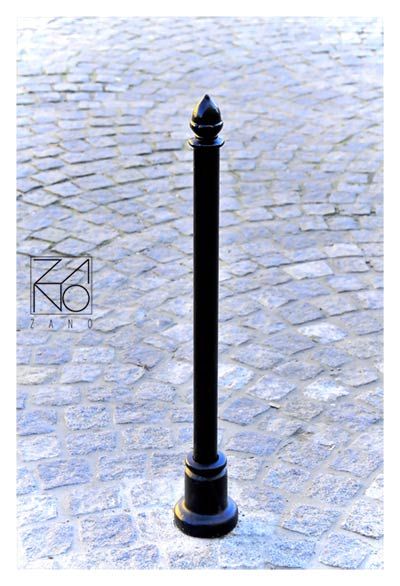
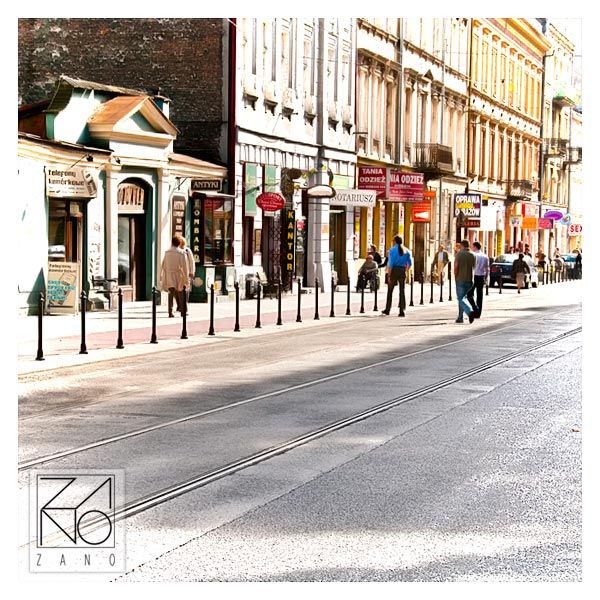
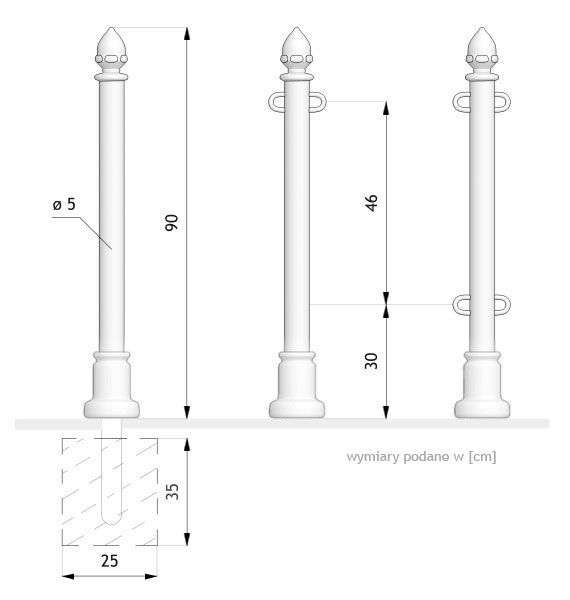
The Tempo bollard (01.052), designed by Tomasz Szpyt, represents a refined approach to modern urban furniture, blending structural integrity with a minimalist aesthetic. Standing at a height of 90 cm above the ground, this bollard is engineered to provide effective traffic management and pedestrian safety in diverse public environments. The design utilizes a robust combination of materials, featuring a durable 50 mm steel tube frame complemented by high-quality cast iron elements. This synthesis ensures long-term resistance to environmental stressors, making it an ideal choice for high-traffic public spaces where both durability and visual coherence are required.
Functionality is a cornerstone of the Tempo line, reflected in the extensive configuration options available for this street furniture element. The bollard can be customized with various handle configurations to accommodate one or two chains, allowing for the creation of versatile physical barriers. Additionally, the inclusion of single or double-sided fence mounts enables seamless integration into existing site layouts. These technical adaptations ensure that the product can serve as a standalone traffic deterrent or as part of a connected perimeter system, maintaining a clean and orderly appearance across plazas, parks, and city centers.
Installation of the Tempo bollard is designed for permanence and stability, utilizing an anchoring section that extends the total height to 125 cm for secure embedding in concrete. By prioritizing high-grade carbon steel (S235Jr) in its construction, ZANO ensures that this piece of street furniture meets the rigorous demands of municipal infrastructure projects. The deliberate balance of the Tempo series' geometry allows it to complement architectural surroundings without overwhelming them, serving as a reliable and professional solution for modern landscape design. Its aesthetic versatility allows it to harmonize with other urban furniture, reinforcing the functional and visual standards expected in contemporary public space management.